Showing posts with label detectors. Show all posts

Saturday, September 10, 2016

NASA to rejoin forces with ESA to launch gravitational-wave space detector!

News was in the air since the LIGO discovery, but the 11th LISA symposium in Zürich made it official: after its dropout in 2011, NASA is ready to rejoin ESA in the effort to build the first gravitational-wave observatory on space. The effect of this dropout was not only to change the mission's name (from the original "LISA" to "eLISA") but also to drastically reduce its budget, resulting in a smaller apparatus and reduced science case.


The recent GW discovery has boosted this field and, after the announcement in February, it was immediately clear that the plan was to anticipate eLISA flight (initially tentatively scheduled around 2034). Now, it seems that eLISA could fly some years earlier (around 2030) and, most importantly, it will probably be build in its original LISA design, thanks to the joint effort of ESA and NASA.
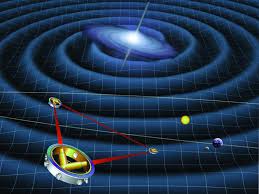
eLISA is a triangular laser interferometer that will search for gravitational waves in space


After the LIGO/Virgo discovery, after the amazing success of the LISA Pathfinder, this is yet another great news for gravitational physics and science in general. Year 2016 will definitely be remembered as marking the birth of a new discipline.


Thursday, April 21, 2016

Good news for eLISA

Some time ago, the European Space Agency appointed a Gravitational Observatory Advisory Team (GOAT) to assess the technical feasibility and effort of the space mission eLISA to build a laser interformeter for gravitational-wave detection. eLISA is the (much) bigger sister of aLIGO and aVirgo, but it operates in space and its arms are longer than 1 million km!

The GOAT reported that the mission is not only technically feasible but scientifically compelling and suggests to anticipate the proposed launch date from 2034 to 2029. It's a very exciting time for gravitational-wave science!

Read the rest of the story on BBC.


Artistic illustration of eLISA's concept

Monday, September 24, 2012

Alcohol and clouds in my institute


Already two weeks ago a new "toy" arrived in my institute. It was the first time that I was seeing a working cloud chamber and I spent most of the afternoon looking for the different tracks, trying to guess the origin, wondering how much radioactive material there is around my office :)
I then thought that it would have been nice to start a new current in this blog talking about the main detectors that we use nowadays in particle physics....and what can be better then the cloud chamber to start this list?
Cloud chambers played a prominent role in experimental particle physics from 1920s to the 1950s, until the advent of the bubble chamber. In particular, the discoveries of the positron in 1932 (acknowledged by a Nobel Prize in Physics in 1936) and the kaon in 1953 were made using cloud chambers as detectors.