Showing posts with label ENGL. Show all posts

Friday, June 16, 2017

New Frontiers in Gravitational-Wave Astrophysics @ Sapienza

The workshop "New Frontiers in Gravitational-Wave Astrophysics" that will be held at Sapienza starting from next Monday.

Copyright: Michelangelo feat. coalescence

The list of speakers is impressive, the workshop will bring together leading experts in gravitational-wave astrophysics (the location surely helped attracting a lot of participants!), with the aim of discussing new frontiers, such as formation of black-hole binaries, multiwavelength and multimessenger astronomy, tests of gravity, neutron-star modelling and equation-of-state extraction from gravitational-wave signals.


Today, Valeria Ferrari, Leonardo Gualtieri and I are finally done with the organization, and I finally deserve this:

June in Rome & fresh beer, it could be worse....

Stay tuned for some news about the workshop later this week!


Friday, March 17, 2017

Can exotic compact objects exist?

Spring is coming, restoring from hibernation, sorry for the long silence on this blog!

This week we have put a new paper out on the arXiv: Exotic Compact Objects and How to Quench their Ergoregion Instability, which is essentially the outcome of my student Elisa Maggio's master thesis, so I thought that summarizing our results was a good excuse to restart this blog.

Exotic compact objects (ECOs) is just a catchy name for several models that have been proposed as alternative to black holes. Black holes are the natural outcome of the gravitational collapse in classical general relativity, but a growing number of theoretical physicists is uneasy with some potential drawbacks associated with them, in particular with the consequences of forming an event horizon as the final state of the stellar collapse.

According to these arguments, the classical picture of black holes would be at clash with quantum mechanics, even for astrophysical objects for which, in principle, quantum corrections are expected to be small. Some of the potential problems include the famous information loss paradox, the recent firewall proposal, the huge entropy of a black hole, and the singularity that lurks in its interior, where general relativity has to break down. There is no general consensus on whether or not these are serious problems that should be addressed in the context of classical gravity, but a growing community of theoreticians is looking for alternatives.

In brief, models of ECOs aim at reproducing all properties of compact dark objects that we observe (namely, a radius very close to the Schwarzschild radius and an arbitrarily large mass) and the theoretical properties (stability, formation as the end state of physical astrophysical processes,...) that characterize the black hole dynamics but without having an event horizon nor a singularity. So far, none of the ECO models on the market succeeded in reproducing all these properties, which is already a strong result in support of the black hole picture. But we know that theoreticians are stubborn and they keep trying.

At the theoretical level, a possible problem with ECOs is the so-called ergoregion instability, an instability that develops in compact objects which are spinning fast and that, unlike a Kerr black hole, do not have a horizon. In this paper, we showed two things:

a) The instability is rather generic and quite strong when the ECO has a surface that does not absorb any radiation (like a perfectly reflecting mirror). Although apparently unrealistic, some quantum-gravity models predict precisely this situation, and might be ruled out by this effect.

b) If the ECO can absorb a fraction of the radiation in its interior (for example by converting it in heat and thermalizing the perturbation), then it is possible to quench the instability. Whether this makes the model viable or not depends on two crucial issues, that we don't address in the paper: a) Are there ECO models that absorb enough radiation to quench the instability? b) What's the final state of the instability?

It is likely that the answer to the latter question is that an unstable ECO would simply slow down as a result of the instability, until it's not unstable anymore. In such case, one should compare theoretical models with observations of highly spinning black hole candidates, to see whether the instability is incompatible with observations.

A lot of work remains to be done but this is surely an exciting time for this kind of studies. As I write this, I'm at Frankfurt airport on my way back after having attended this workshop. I have found great interest among the participants related to the possibility of ruling out or detecting ECOs using GW observations (see also this other recent paper), which was something unimaginable just a few years ago, before the gravitational-wave revolution.

Anyway, truth is, i wrote this to have the opportunity also to share some funny pics from Elisa's graduation last December :-)

Elisa going through the wormhole, she entered as an undergrad
and emerged from the throat as a grad student ready for her PhD
From the left: Leonardo, Elisa, and Paolo celebrating Elisa's defense

Thursday, December 1, 2016

Meanwhile, at the Department of Physics @ Sapienza....

Random snapshots taken at the Department of Physics these days...love this place!

1) Perci & the Ciclofficina
Roberto Perciballi used to work as the priceless "factotum" of the Physics Department. He was in charge of essentially any repair, construction, moving, removal in the institute. Besides being a celebrity among students, he was also so on the stage as the frontman and singer of Bloody Riot, one of the first italian hardcore-punk bands. "Perci" suddenly died last March, leaving behind two daughters and the sorrow of many fans and friends.

The members of the student association "Ciclofficina" (named after Perciballi earlier this year) paid homage to him with this emotional and spectacular painting, showing a younger (and possibly punker) Roberto Perciballi. The painting features the end of a hallway (below on the right) that is offered by the Department to the student association. The poles have been installed after the recent earthquake in Central Italy which, although mild in Rome, also left some damage to the building.


2) Fidel & Majorana
These days, many all over the world are paying homage to the controversial figure of Fidel Castro. In fact, the whole Sapienza campus is upholstered with the poster below. However, how many can show off Fidel right next to Ettore Majorana's statue in front of the classroom named after him (below on the right)?


3) < Yes | No > & the Italian Constitutional Referendum
Tomorrow, Full Professors of Theoretical Physics Giovanni Bachelet and Giorgio Parisi will lead a discussion on the hottest topic in Italian politics nowadays: the Constitutional Referendum to be held next Sunday.


Prof. Bachelet is a former member of the Parliament and supporter of the constitutional reform. Prof. Parisi is the founder of the recent initiative "Salviamo la Ricerca" (see his recent letter to the Nature) and will defend his criticisms on the reform. I am looking forward to seeing how the physics community of our Department will react and will definitely attend the debate.

Wednesday, October 12, 2016

International Physicists Network is born!

Great news! A new network of young physics researchers is born!
International Physicists Network (IPN) is a new italian no-profit organisation with the aim of building a national and international network of young physics researchers, and with the goal to create fruitful collaborations within different physics areas.


IPN has been founded by 11 researchers and professionals with a general background but multidisciplinary specialisation in physics: Davide Pietrobon (president), Marina Migliaccio (vice-president), Giordano Cattani (treasurer), Emanuela Pusceddu (secretary), Fabio Agostini, Claudia Antolini, Marco Di Stefano, Giacomo Fragione, Lorenzo Pagnanini, Matteo Serra and Francesco Stellato.
The main projects of IPN are the organisation of the Young Researcher Meeting, an yearly multidisciplinary conference aimed at students and young researcher in physics, with the goal to foster discussions and exchange of ideas in an informal atmosphere, and the Dandelion project (in collaboration with Find your doctor), a platform which allows to complement the traditional top-down approach to the job-market with an innovative bottom-up mechanism.


Tuesday, September 27, 2016

Laura and Nicola are Masters!

This week, my first two master students, Nicola Franchini and Laura Sberna, have defended their theses, and obtained a master degree (MSc in Astrophysics and in Physics, respectively) at Sapienza with maximum marks!

Nicola's thesis is entitled "Constraining Black Holes with Light Bosonic Hair Using Quasi-periodic Oscillations", whereas Laura's thesis is entitled "Early-Universe Cosmology in Einstein-scalar-Gauss-Bonnet Gravity"


Little time to celebrate for them: Laura is moving to the Perimeter Institute to start a PhD with Neil Turok, whereas Nicola is already at the University of Nottingham and just started a PhD with Thomas Sotiriou.
Kudos to them and good luck!


Celebrating Laura's "laurea" in front of the Physics Building "Edificio Marconi" at Sapienza. 
Elisa (on the left) is next on the line to finish her thesis.


Thursday, September 1, 2016

Lectures on Gravitational Waves

This and next week I will be giving a series of lectures on "Gravitational Waves" at the Escola de Astrofísica e Gravitação (EAG8) at IST (Lisbon) and at the international school Invisible16 at SISSA (Trieste), respectively. The lectures at SISSA will be also recorded.

Some material related to the lectures (references, problems and notebooks) can be found here (this is still work in progress, since I am still preparing the problems and the Mathematica notebooks...)


The poster of EAG8

The poster of Invisible16


Friday, May 6, 2016

One cannot get rich with fundamental physics, they said...

..unless you make a landmark discovery such as the first detection of gravitational waves. In such case, you might win a $3 million Breakthrough Prize in Fundamental Physics!

The three funding fathers of LIGO, Ronald P. Drever and Kip. S. Thorne and Rainer Weiss, are going to share $1 million, and the other other $2 million will be split among 1,012 scientists who authored the milestone article in Physical Review Letters and a list of key contributors to the theoretical and experimental understanding of gravitational waves (Luc Blanchet, Thibault Damour, Lawrence Kidder, Frans Pretorius,
Mark Scheel, Saul A. Teukolsky, Rochus E. Vogt) without which LIGO outstanding discovery would not have been possible.

As Richard Feynman brilliantly put it:


This also applies to the economical reward that might following great discoveries, and it is probably the reason why reckless and economically inconvenient science is pursed: because it is passion driven rather than money driven.

Kudos to the LIGO/Virgo Collaboration!


Sunday, May 1, 2016

College is not a commodity. Stop treating it like one.

"Unlike a car, college requires the “buyer” to do most of the work to obtain its value. The value of a degree depends more on the student’s input than on the college’s curriculum."

Just came across this excellent article by Hunter Rawlings on the Washington Post, Can't agree more.


Thursday, April 21, 2016

Good news for eLISA

Some time ago, the European Space Agency appointed a Gravitational Observatory Advisory Team (GOAT) to assess the technical feasibility and effort of the space mission eLISA to build a laser interformeter for gravitational-wave detection. eLISA is the (much) bigger sister of aLIGO and aVirgo, but it operates in space and its arms are longer than 1 million km!

The GOAT reported that the mission is not only technically feasible but scientifically compelling and suggests to anticipate the proposed launch date from 2034 to 2029. It's a very exciting time for gravitational-wave science!

Read the rest of the story on BBC.


Artistic illustration of eLISA's concept

Thursday, February 11, 2016

Hey Grandma look: I finally study something that exists!

So much has been already written about today's announcement of the first direct discovery of the gravitational waves from two merging black holes by the advanced LIGO detector. Some examples:

[1], [2], [3] (this beautiful piece by my friend and colleague Emanuele Berti)

In Italian press: [1], [2], [3]

Exactly 100 years ago, Albert Einstein proved that his theory of gravity, General Relativity, predicted the existence of gravitational waves.


This is nothing but one of the most outstanding historic discoveries in science. However, since you can find much deeper posts on this topic, here are some random, not-so-serious, thoughts hastily written down while watching today's live streaming announcement (sorry for typos, this is written on the wings):

1) Look Grandma: I finally study something that exists!
[Last time someone told my grandma that maybe black holes didn't exist after all.. she literally cried!]

2) Wow, my field of research has finally become mainstream! [is this good of bad? Anyway, the largest lecture hall at the Physics Department at Sapienza was full 30 mins before the live streaming..that's pretty uncommon for something related to gravity...]

3) The first direct detection of gravitational waves is really great, but what is emitting these waves is even more interesting: these are two black holes orbiting each other, loosing energy through gravitational-wave emission and finally merging to form a final big black hole. All of this is beautifully predicted by Einstein's theory of General Relativity and required several decades of theoretical, experimental and computational work.

4) Now everyone claims they have predicted that the signal from a binary black hole merger would have been detected. Truth is, just 6 months ago nobody would have bet on this particular source.

5) Related to this, isn't it amazing how physics works? It takes just a single observation to completely change the paradigm that theorists have built over decades. Just 6 months ago very few people would have predict that LIGO -even in the case of a detection- would have been able to test General Relativity or just to make some science or astrophysics out of this discovery. Well, judging from the result of the paper published today (and the companion papers to come) this expectation was completely wrong.

6) Finally, my bets for the Nobel Prize (in random order)

Rainer Weiss, one of the founders of LIGO

Roy Kerr, who discovered the unique solution of General Relativity describing a spinning black hole

Kip Thorne, one of the cofounders of LIGO, and of the fathers of modern General Relativity
(plus one of the creator of the movie Interstellar)

Tuesday, February 2, 2016

Vitor Cardoso's and Thomas Sotiriou's visits @Sapienza

In the last two months we had two guests at our Department:


Group picture taken [1] after a goodbye social dinner in the historical center of Rome. 
From the left to the right: Leonardo, Thomas, Vitor, Paolo, Ana and Leonardo Macelloni (an old friend from the University of Mississippi who I met at the time of my first moka machine)


[1] By chance, this picture was taken by the bodyguard of President of the Senate Renato Schifani, who was passing by while we were looking for a random photographer.

Sunday, January 31, 2016

Recommended by us: Science Pie - A podcast about physics, history, literature and much more

Dennis Schulz, a physics student, and Annika Brockschmidt, a history and German student, are two podcast enthusiasts based in Heidelberg (Germany).

They created the independent podcast Science Pie, focussing on the variety of subjects science can offer. Their topics range from history to physics, from literature to engineering, in particular interdisciplinary work - a range of topics hard to find in the jungle of podcasts. They often use interviews with an involved researcher or professor as a base for the episodes.
And all of this is provided in a bilingual version (English/German) and a special care for details.

Dennis and Annika’s podcast successfully meets the effort of joining science curiosities, interesting stories about people and a collection of knowledge and facts on history, literature and myths. Join them and enjoy!


Tuesday, December 29, 2015

Meetings in Lisboa

Right before Christmas I visited Lisbon to attend a conference and a workshop held at the Instituto Superior Técnico. It was a great opportunity to come back to Portugal after almost one year and meet a lot of friends and colleagues there.


Saturday, November 28, 2015

Visit to Shangai

Many things have happened in the last few weeks, including the Centenary of General Relativity. On November 25th, I wanted to write a post on this event, but I couldn't because I was visiting Cosimo Bambi's gravity group at Fudan University in Shangai and, as it is infamously known, Google products (including this webpage) are inaccessible from China. None of the standard workaround really worked for me so, as a part of my Chinese trip, I have experienced how one feels being without access to gmail, google maps, facebook, etc... (it turned out to be not that bad in fact..)

During the visit, we had a mini-workshop with astrophysicists Javier Garcia-Martinez (Harvard-Smithsonian CfA), Thomas Dauser (Erlangen-Nuremberg) and Matt Middleton (Cambridge) who are working on different aspects of the electromagnetic emission from accretion disks as a possible way to measure the black-hole spin.


Shangai's skyline as viewed from one of the skyscrapers of Fudan University. The city is simply ENORMOUS..


Friday, November 20, 2015

Recommended by us: Einstein's Special Theory of Relativity postulates explained by a teenager

""
Eighteen-year-old student Ryan Chester has just won US$400,000 for this video explaining Einstein’s Special Theory of Relativity as part of the inaugural Breakthrough Junior Challenge - an international competition that aims to inspire the next generation of scientists and science communicators. And it’s not hard to see why. If you heard the words, "Einstein’s Special Theory of--" and tuned out because it’s all too hard, we have a feeling Ryan will change your mind.


 Original Sciencealert article here

""

Thursday, November 5, 2015

TAUP 2015 or On my first international conference


Mr. What and Mr. Why
Topics in Astroparticle and Underground Physics (TAUP), is an international biennal conference arrived at its XIV edition. It covers topics from cosmology and particle physics, to trans dark matter and neutrino physics and to continue with high energy astrophysics, cosmic rays and gravitational waves. Theoretical perspectives as well as experimental strategies and developments are included.
TAUP is born at the Laboratori Nazionali del Gran Sasso (LNGS) of the Istituto Nazionale di Fisica Nucleare (INFN) and we are equal in
age, besides that, because of the biennal frequency, it is a sparkling teenager. About me, well...  I am already a PhD student and I have attended the conference with a nice group of colleagues.

Sunday, October 18, 2015

Visit to EGO-VIRGO

A meeting of the theoretical and experimental groups of the Italian Institute for Nuclear Physics (INFN) working on the detection of gravitational waves and on theoretical aspects related to them was held at the European Gravitational Observatory (EGO) in Cascina, near Pisa.

The site hosts Virgo, a detector of gravitational waves which -in one year from now- will be ready to join its U.S. cousin Ligo in the decade-long search of gravitational waves from compact objects.

Me standing in front of one of the 3-km long arms of Virgo. Is the motion due to the passage of a gravitational wave? Hope not since the detector is still offline...


What is a gravitational wave?

Wednesday, April 29, 2015

Jan Steinhoff @ Sapienza

Last week Jan Steinhoff from the Albert Einstein Institute visited our group in Rome, giving a seminar on "Effective action for compact objects and universal relations". Over the weekend, we went for some city sightseeing. Here, from left to right, Jan, Paolo and special guest Matteo are visiting the magnificient Caracalla's baths.


Friday, January 30, 2015

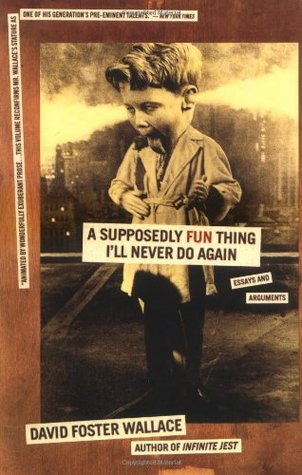
Two Supposedly Fun Things I'll Never Do Again

Writing a review is like pregnancy (as far as I can imagine being pregnant and with due respect to real mothers...), one starts super-excited, then begins to realize the initial expectations were too optimistic and that the entire experience is going to be much tougher than originally expected; and while the "baby" is growing, everything becomes tougher and tougher, to the point that one starts looking forward to the delivery (and THAT is probably the toughest part).

This is why finishing two reviews (here and here) in the same week is pretty much like having a twin childbirth, and now I feel like one of those exhausted mothers who stares at their babies with extreme joy.


For those who missed the reference in the title, one of the best books ever..nothing less than a must-read! 


The first work is an overview on superradiance. [If you are curious about what superradiance is... well, read the book! Meanwhile, in very few words superradiance is a broad class of phenomena related to energy amplification in dissapative systems. Because of dissipation, in special kinematic configurations the energy stored in some body/medium can be transferred to another body or to radiation, thus producing a sort of amplifier].